Conclusion
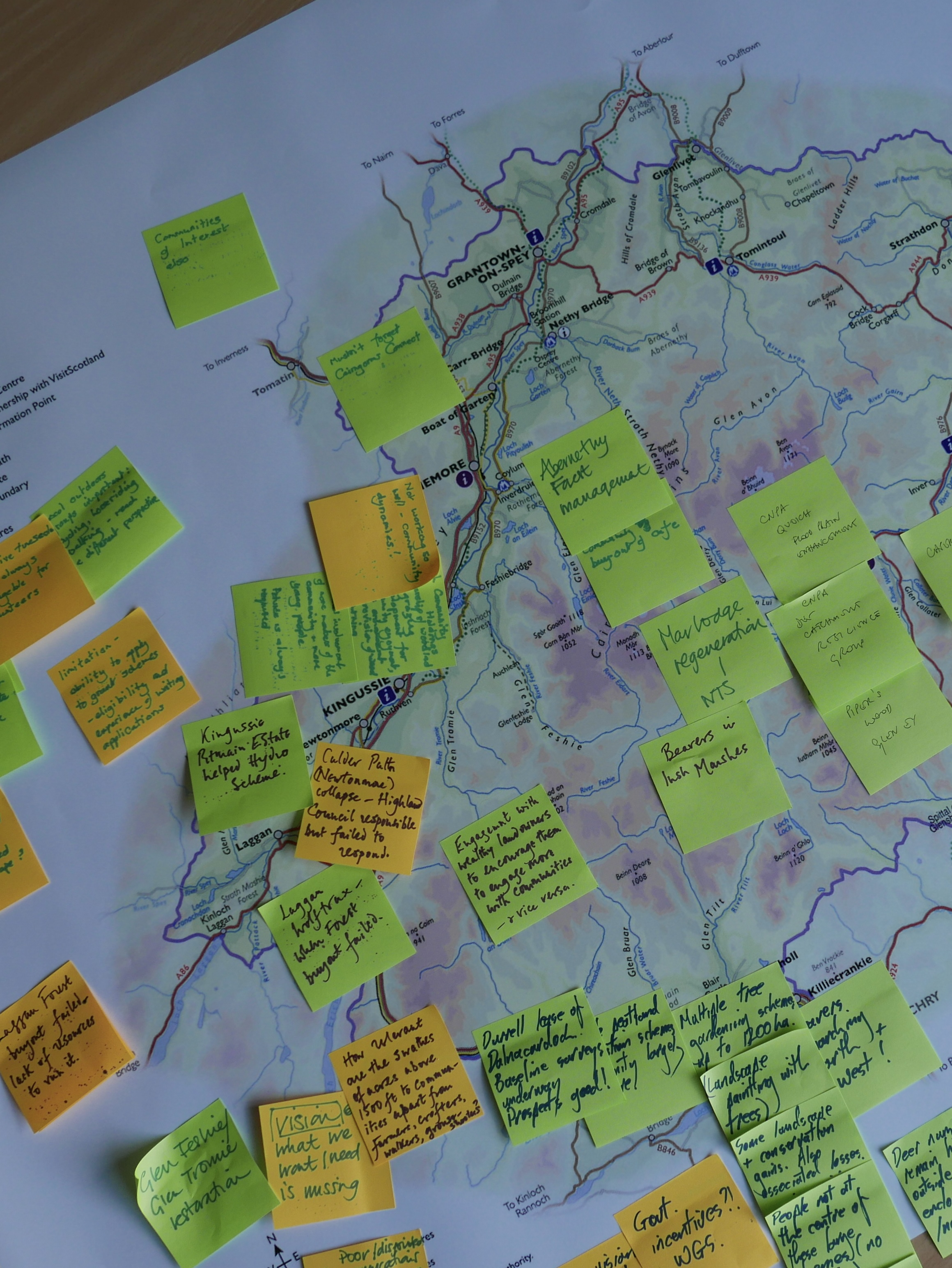
The Community-Based Landscape Regeneration Toolkit has been co-developed with communities in the Cairngorms and surrounding areas over three years of interviews, workshops, and fieldwork, from 2023 to 2026. As the first toolkit to address landscape regeneration and community contributions, it brings together common threads and mutual learnings from our findings, stories, and toolkit review. It also outlines the substantial obstacles communities encounter when seeking to engage in, lead, and undertake landscape regeneration initiatives. Finally, the toolkit review revealed gaps in support for communities navigating this challenging landscape.
These materials show how communities have initiated projects, addressed challenges and transformed governance issues, while revealing opportunities to develop community-based approaches to landscape restoration in several areas. At the same time, land reform is central to furthering these approaches, and other influential factors shape how they develop, notably limited community capacities, local democratic gaps, and a lack of social infrastructure. Building on our findings, a set of aims and actions has been developed and co-designed with communities in workshops, highlighting the support and action needed to further community involvement and leadership on landscape regeneration.
By collecting, analysing and presenting these materials for wider audiences, we hope this toolkit can inform and advance practices that facilitate, support and complement community-based approaches to landscape regeneration. Across its various components, the toolkit serves as a mutual learning resource, helping to identify opportunities and barriers for communities, synthesise community voices around landscape regeneration and navigate existing toolkits and forms of support.
We have developed this toolkit with and for a wide range of stakeholders, with the aims and actions oriented toward policymakers, governmental bodies and third-sector organisations to help create further space for bottom-up and community-based approaches to landscape regeneration. Communities can learn from one another through the landscape regeneration stories, where the toolkit works as a mutual learning resource. At the same time, the aims and action points can also be drawn upon by communities as campaign materials for advocating about land issues and as building blocks and supporting materials for developing visions, planning or other forms of collective expression.